
 admin
adminNők Lapja magazine was kind enough to report on our last event, the ”Elvis Presley Dining and music event at the Ferdinánd Monarchia Restaurant” in Budapest. Please enjoy some photos and the translation of original article.
According to John Lennon, there was nothing before Elvis Presley, and today we also know what the world is like after Elvis: his memory lives on not only in music but also in flavours. His fans evoked the spirit of the King around Király Street and tasted all his favourite foods.
By seven in the evening, the downtown restaurant fills up with elegant guests, all united by one thing: they love, truly love, Elvis Presley. This becomes obvious even during the musical quiz game before dinner. When they have to recognize songs in karaoke versions that mention the King’s favorite foods, they eagerly shout out the answers. The game is hosted by showmaster John Laslo Farkas.
Afterward, Judit Spaczér, president of the Hungarian Elvis Club, gives a welcome speech in which she also mentions that on August 16, the anniversary of the star’s death, a candlelight memorial will be held in Budapest’s Elvis Presley Park, where they one day hope to erect a statue in his honour. She is followed by the restaurant owner, Imre Martin, who talks about the cuisine of the poorer southern states of the USA. “They certainly don’t go easy on the sugar—they heap it on by the spoonful. That’s the essence of American cuisine. We like life sweet,” he concludes. “And tonight, we won’t stand in your way. Enjoy yourselves!”
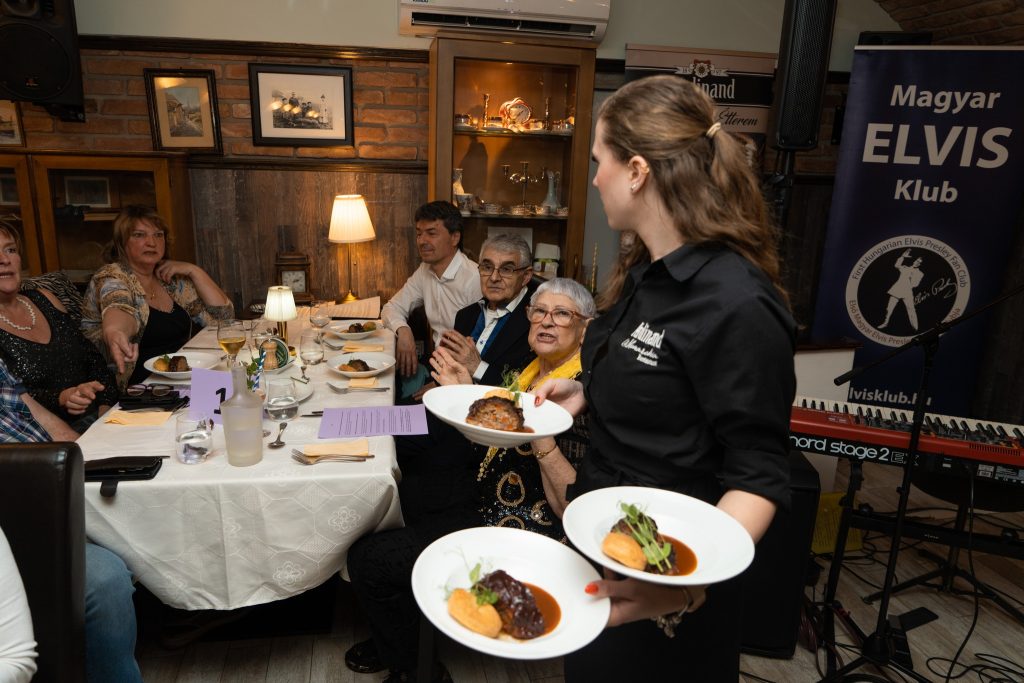
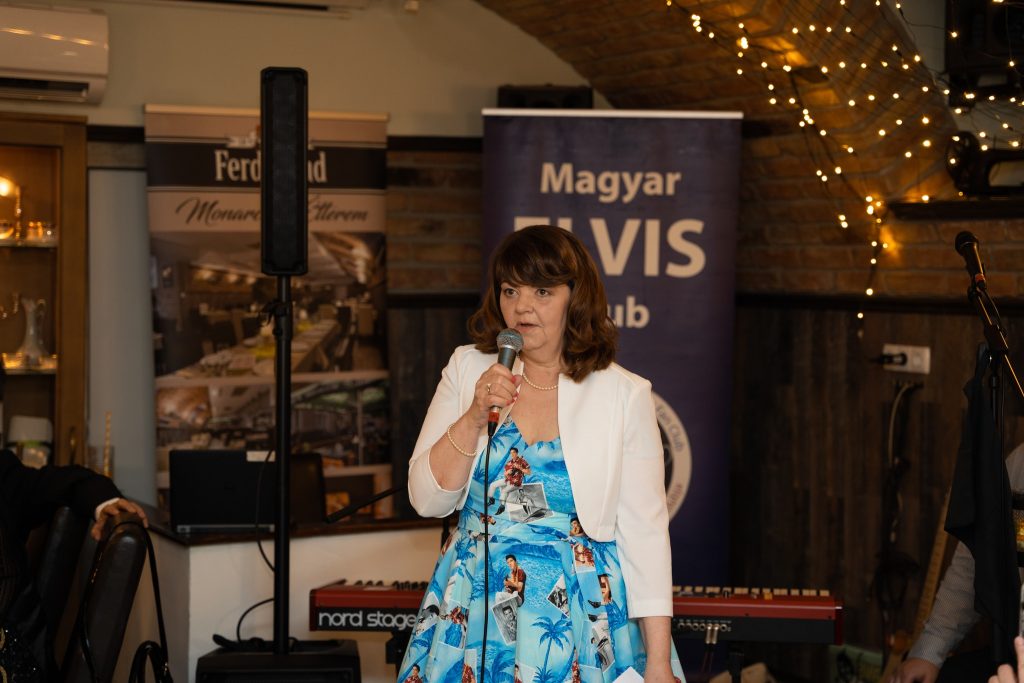
Finally, Ágnes Dobos—the hostess and organizer of the evening—welcomes the guests. Tonight, the chef is working from recipes that Ágnes spent over ten years collecting from the recollections of Elvis’s cooks, family members, and friends. Thanks to them, we get to taste the King’s favorite dishes.
Ágnes Dobos knows everything about Elvis’s eating habits. On her blog, when summarizing Presley’s biography, she writes things like: “Elvis’s first solid food was cornmeal mush, drenched in milk, sweetened with sugar, and served on a wooden plate. He remained fond of this dish for the rest of his life.” Due to the family’s poverty, there were times when they couldn’t even afford Elvis’s 25-cent school lunch. In the hardest times, it even happened that they hunted young squirrels and roasted them for food.
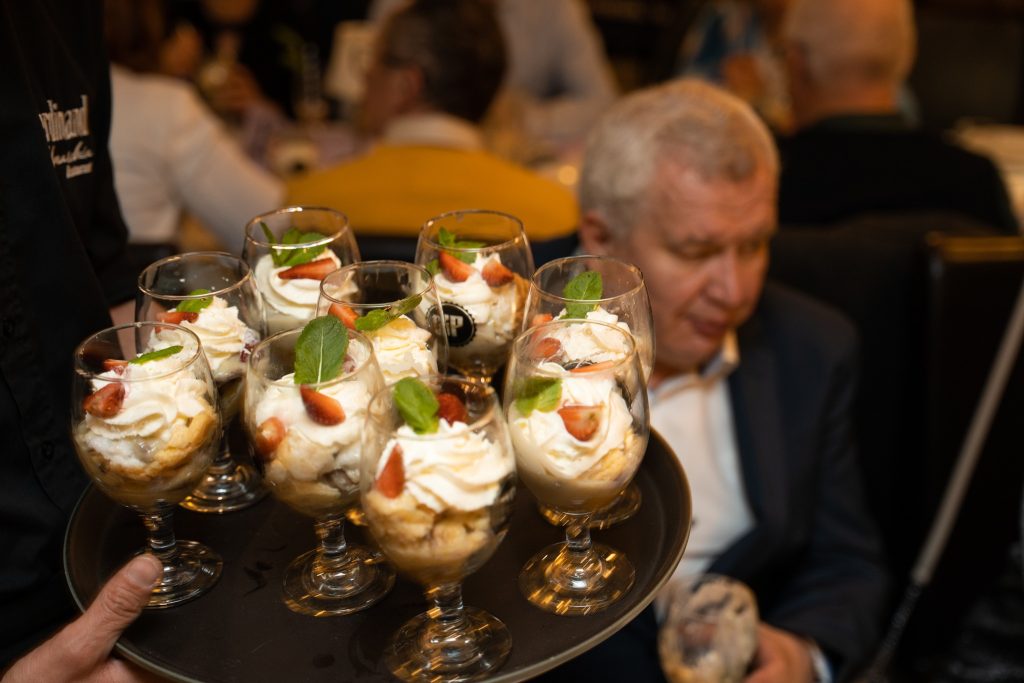
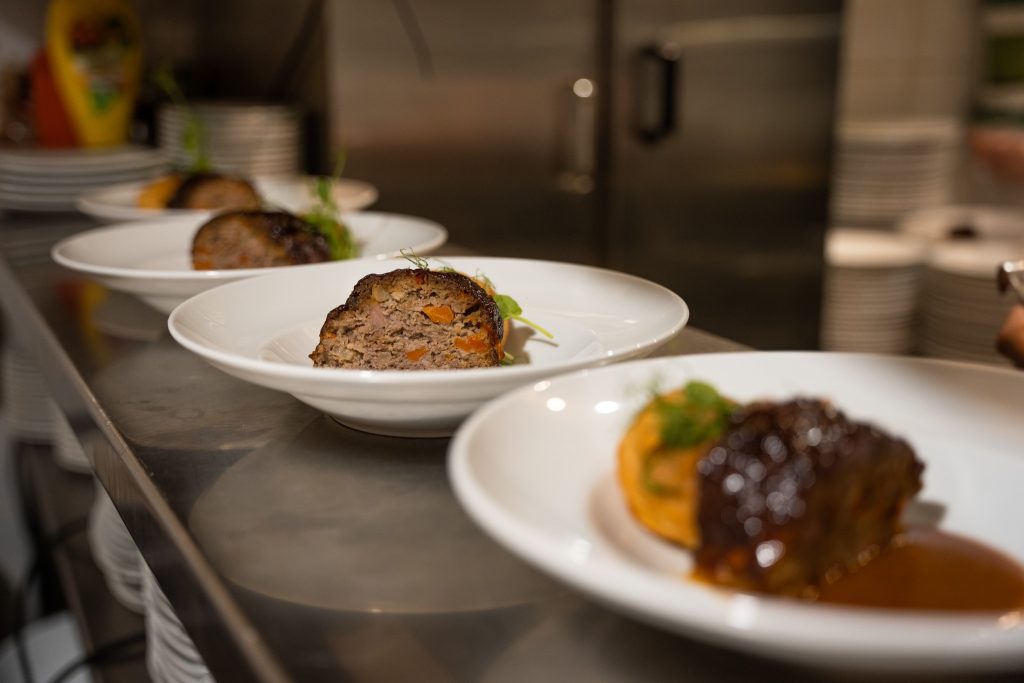
The evening’s menu, however, wasn’t built entirely from the dishes of Elvis’s most difficult years. As a welcome bite, guests could sample Elvis’s favorite sandwich—fried banana with peanut butter. The appetizer was meatloaf: a baked meat roll filled with vegetables and ham, wrapped in bacon and coated with a tomato crust, served with buttery biscuits. Elvis reportedly asked for this dish at nearly every meal and could eat six to eight pieces for breakfast alone. The main course featured fried chicken with cheesy polenta, fresh spring salad, and tomatoes. Dessert was baked banana pudding—a dish the King loved so much it was prepared for him daily, even when he was in the hospital.
Elvis Keeps You Young
The hostess of the evening, Ágnes Dobos, is a paper engineer by profession and has been running her own paper import business for 21 years. Her frequent travels made language skills important to her. While attending a language school, she had an American teacher who also played the mandolin. This piqued Ágnes’s curiosity, and she looked up country music styles online—where she stumbled upon Elvis Presley’s videos. “Up to that point, I only had the image of the older Elvis in my mind—overweight, tired-looking, wearing those rhinestone-studded white jumpsuits, as most Hungarians knew him,” she says. “But then I found a video from 1968, what might have been the best concert of his life. He was thirty-three years old, young and energetic. I was captivated.” She kept clicking, and gradually, she was drawn into his talent and artistry.
A few months ago, in Vienna, she had the chance to meet Priscilla Presley in person. During a theater event, Priscilla spoke about the joys and heartbreaks of life with Elvis. The actress has continued to care for her late husband’s legacy, ensuring that his home—now the second most visited residence in the U.S. after the White House—operates as a museum.
Ágnes has been an active member of the Hungarian Elvis Club—which was founded in 1982—for seventeen years. In 2011, a square was named after the star in Budapest, near the Margaret Bridge, and as a gesture of gratitude for publicly supporting Hungarian refugees in 1956, Elvis was made an honorary citizen of Budapest.
“Elvis fans love to talk about what they would have done differently if they had been his friends—his barber, his wife, for instance—what they might have changed to help him stay with us longer, in happiness and health,” Ágnes reflects. “One doctor friend of mine said he would have prescribed fewer medications. Since I love cooking, my first thought was that I would have loved to be his chef. I would’ve made tastier, more varied, and healthier meals for him.”
She believes that the real issue with Elvis’s eating habits was not so much what he ate, but how much—he could consume up to 25,000 calories a day.
Her friends eventually convinced her to gather her knowledge and modernized recipes into a cookbook. The manuscript is already complete, and she’s even enrolled in a course to deepen her food photography skills. Her dream is to publish the book in several countries. She believes her story can inspire women who feel that life ends after sixty. “It’s never too late,” she says, encouraging everyone to start pursuing their dreams. “Beyond the love of family and work, it’s our hobbies, friendships, and experiences that keep us young.”
The Hungarian Elvis Presley
At our table sits Gábor Lantos, who will perform Elvis songs after dinner. Gábor attended music school and was just eleven years old when he first heard Elvis Presley on the radio — they were playing Love Me Tender. He was instantly captivated by the voice and asked his father who was singing. At the time, he could only catch a few songs on the radio, so he began borrowing VHS tapes from the library to learn more about the star. His passion grew so strong that by the time he turned eighteen and started taking music and singing seriously, it was through Elvis’s songs that he found his voice.
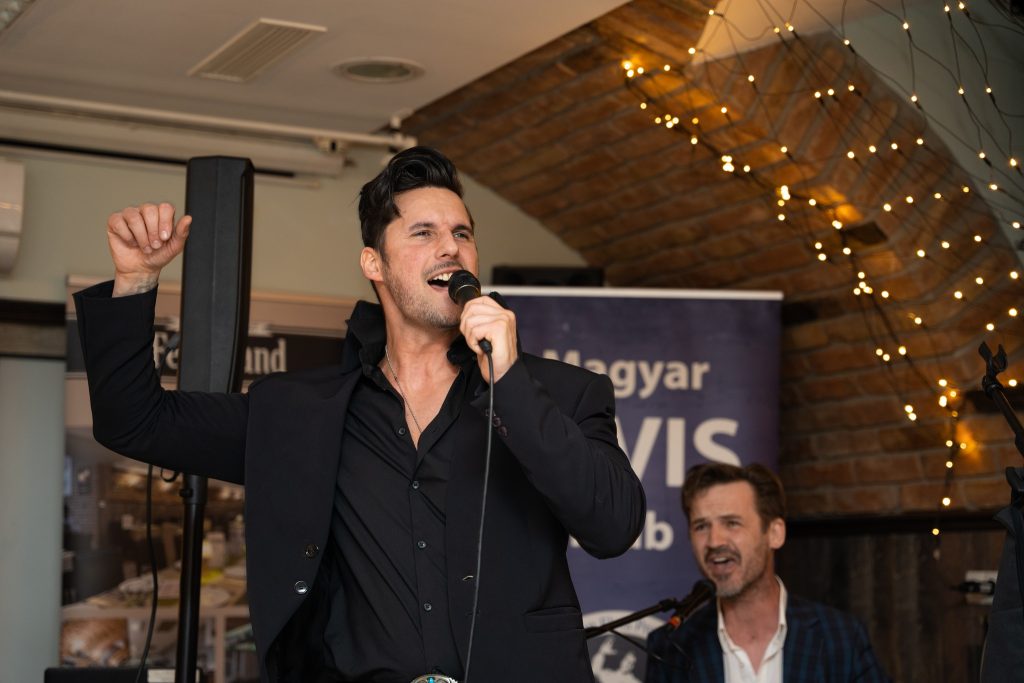
Elvis Presley served in the military in the late 1950s in Bad Nauheim, Germany — the same town where the European Elvis Festival has been held for the past twenty-three years. In 2021, Gábor entered the Elvis impersonator contest, which required sending in an audio recording and photo. Out of 120 applicants, he was selected among the top ten and got to perform live on stage. He became the first Hungarian to win the festival. Since then, he has been invited to numerous singing competitions and performed several times in the UK. In February 2024, at the prestigious Elvis event in Blackpool, he reached the semifinals — the top twelve. “Keep going, Gábor!” encouraged an English woman who had been attending Elvis festivals for over twenty years. And next January, Gábor will compete in the European Championship. The jury judges not only vocal quality and performance but also the outfit — it must match the era from which the song originates.
Gábor’s passion has even influenced his fiancée, who was so inspired she had Elvis’s portrait tattooed on her arm. The tattoo turned out so well that in 2023, photographers in Bad Nauheim noticed it, and it ended up on the cover of a magazine.
And so, the spirit of the King lives on — not just on stage and in the kitchen, but in people’s hearts, their stories, their passions — and even on their skin.
He heals people
“Many devoted fans believe that Elvis was sent by God to entertain, heal, and uplift humanity with his heavenly voice and beauty. He energized the youth, comforted the broken, and among his songs, people of every age could find one that spoke directly to them,” wrote Ágnes Dobos on her blog. And indeed — at one table, for example, a family from Kiskunhalas sits together, with the parents’ love for Elvis being carried on by their university-aged daughter.
“I was born in Târgu Mureș, and my father used to sing Elvis songs in the biggest, most famous restaurant there. I’ve been a fan for forty-five years without pause. I still adore rock and roll and love dancing to it,” says the father, András Fésűs, whose wife invited Gábor Lantos to Kiskunhalas for his fiftieth birthday.
“I’m a bit more of a sentimental soul,” his partner, Ágnes Bakos, adds, “and Elvis had many emotional, lyrical songs. He gives something to everyone, shares timeless, relevant messages — that’s why we love him. Their daughter, Adél, now studies in Budapest. “It’s so nice that when my parents visit me, we can take part in family-friendly events like this Elvis night,” she says. “I grew up with Elvis — even the fridge at home was decorated with Elvis magnets.”
Ágnes Dobos also invited her hairdresser, Tamás Zsidró, to the event. “During my youth, it was mostly Hungária (a Hungarian rock’n’roll band) we listened to, since Miklós Fenyő had just formed the band,” says the master hairdresser. “I didn’t listen to Elvis much, but rock and roll has always been close to my heart.”
A few tables away sits another guest, Tamás Dóka, wearing a shirt printed with Elvis album covers. He enjoys singing Elvis songs — even while driving his Cadillac, a pink classic car just like the one the King gave his mother. Tamás and his partner, Zsuzsi Homoki, have known each other for ten years, and since then, Zsuzsi has become a regular at Elvis fan club events. In addition to the great music, she especially appreciates the strong sense of community.
The evening ends with a performance by Gábor Lantos and the King’s Men band. Before each song, Gábor shares a story. For example, he recalls how Elvis often bent down to embrace his fans during concerts. At one Las Vegas show, during Love Me Tender, he got so carried away with greeting the audience that the song, which normally lasts a few minutes, stretched to over six and a half. The band just kept playing, patiently waiting while the King finished hugging and loving everyone in the front rows.
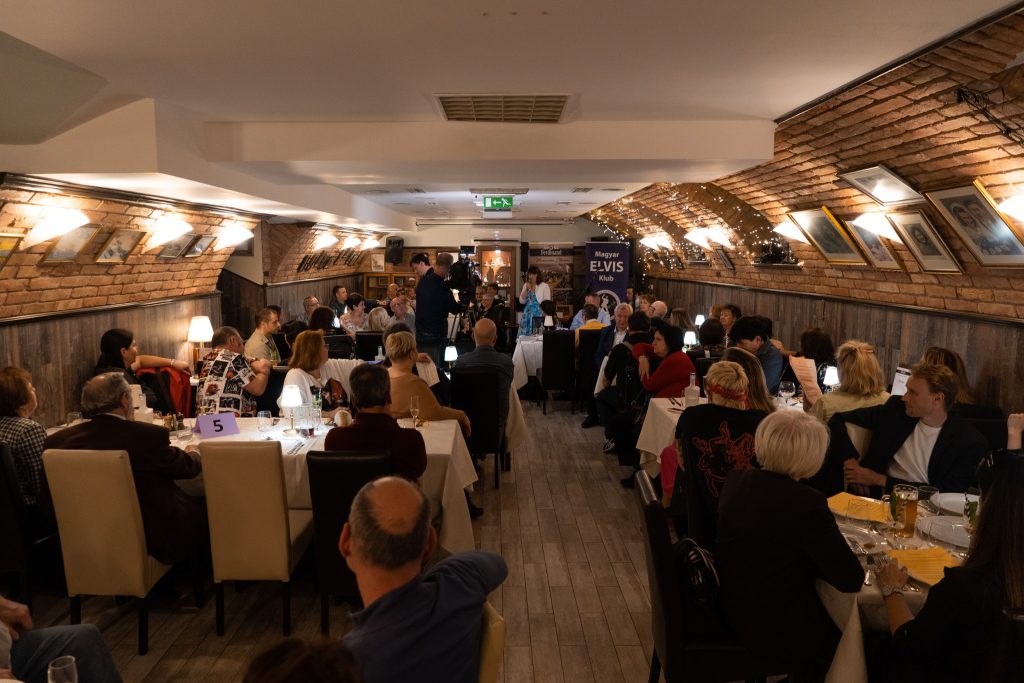
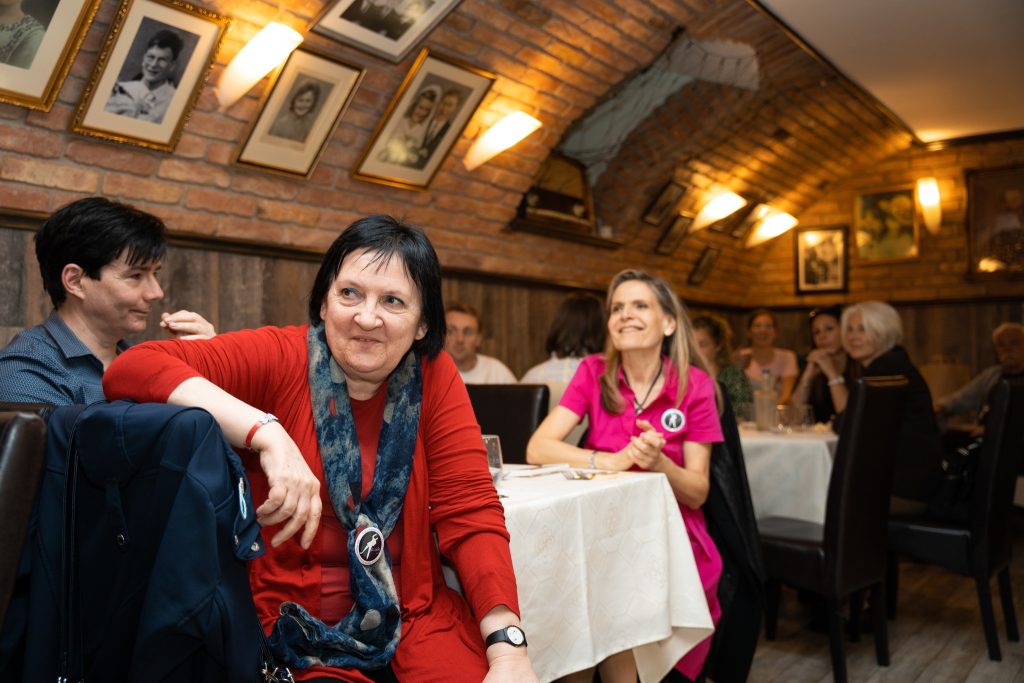
— Attila Pór
Nők Lapja Magazin